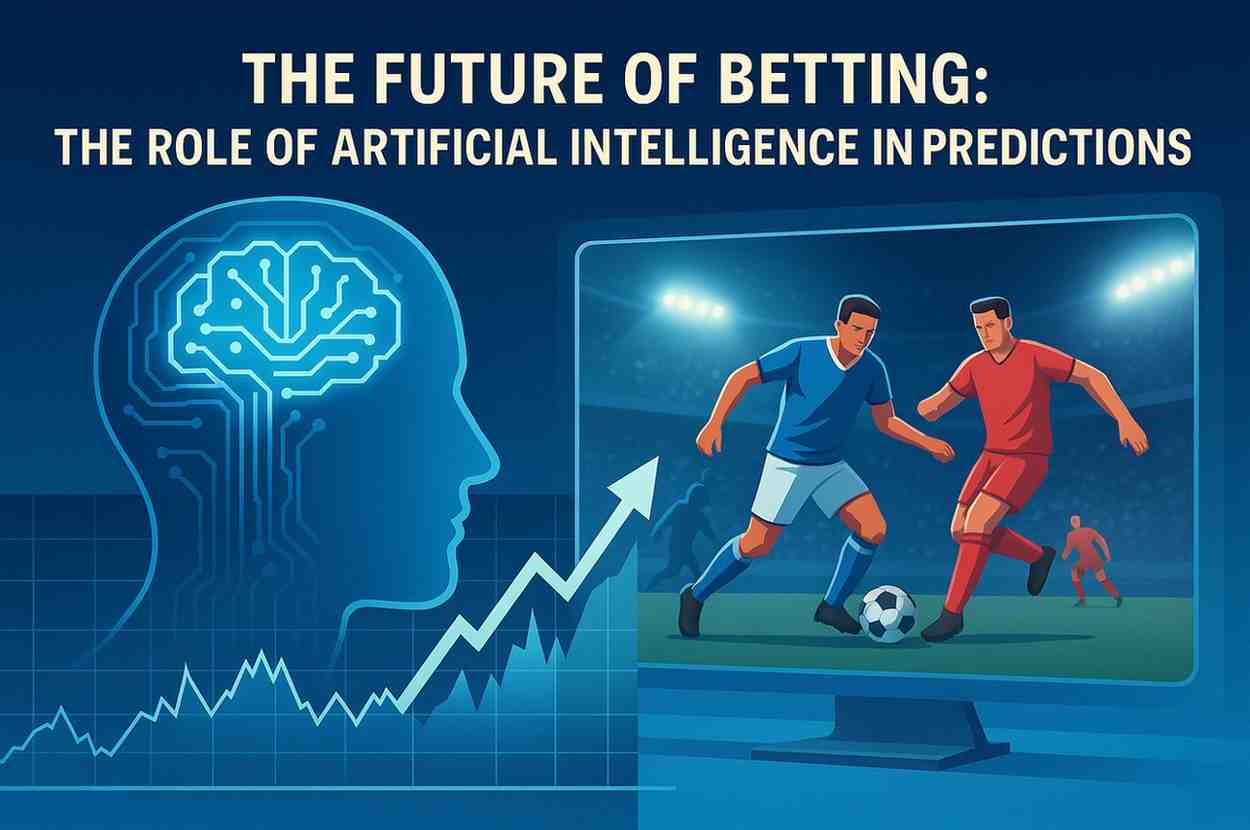
Artificial intelligence (AI) is losing its ambiguity and is already changing the ways predictions are made in sports like football. Player movement analysis and match outcome prognostications were unheard of as recently as a decade ago. AI is able to provide tools and insight on these predictions now. As exemplified by 1xbet apk, technology has become synonomous with accessibility, allowing fans to seamlessly interact with live matches and predictive analysis in real time.
AI and machine learning thrives on data. Breathtakingly huge data sets are generated with every match in an international tournament. Goals, passes, possession, fitness and tactical records… the whole works. Algorithms are able to digest this and more with more accuracy and speed than humans. Tiredness, bias and pattern recognition are of no concern to algorithms.
How AI works in sports predictions
In sports predictions AI-technology works on the basis of machine learning. Historical and live data are processed and refined. They learn patterns on how teams tend to react and play under pressure, and how certain players tend to influence the direction of the game. The result is ever-improving predictions based on probabilities that become more and more precise as an increasing number of data inputs are added.
Data volume and accuracy
Tournaments today bring astounding numbers. During a single 90min-One game apart from the coverage of players and players position, tracking, ball movement, and crowd noise can generate more than 2 million data points of movement. This is the ease of AI.
Unlike traditional reports, AI projects and predicts events as they are occurring during a game. If there is a crucial striker injury during the 30th minute, the AI adjusts its forecasts in real time. These adjustments into the forecasts on the fly show the nature of the decision that is made and how the adjustments made in an instant are a reflection of real time changes during a game.
The role of sentiment analysis
AI works on data sets that are not considered traditional. Predictive engines that are fed streams of social media material, fan sentiment, and media coverage. AI captures and notes on the sentiment on social media if the prediction of a performance is low because of off the filed situation. These works, although quite vague and subjective, tend to have a larger impact on the end result when compared to raw data.
Human judgment versus machine accuracy
Human expertise is not displaced by AI, in fact it is enhanced. More often than not, players of a high caliber decision are made by integrating the AI analysis provided. In the intersection of context and emotion, as well as high velocity and precision, is where the strongest strategies are derived from.
Areas where AI transforms predictions
AI brings innovation to the analaysis of football and the sports world in general. Three examples in particular stand out:
- Forecasting injury risks and analyzing player fatigue
- Tactical comparisons of teams’ matchups
- Event-driven live updates of win probability throughout the game
All of this reduces guesswork and allows for better decision-making.
Integration with mobile platforms
This integration makes these technologies available to sports fans. Tools that allow for the ease of onboarding, such as http://1xbet.tz/en/promo, rapidly increase the accessibility of AI-generated updates to the general public. These platforms keep the user engagement high and the experience balanced by combining ease of registration with forward-looking analytics.
Statistical insights
The numbers tell the story when it comes to the impact of AI. In controlled comparisons, AI models predicted outcomes with an accuracy of 65% to 72%, whereas expert predictions were in the range of 55% to 60%. The improvement, while not perfect, is evident. It only seems to get better with each season.
| Method | Average Accuracy | Improvement |
| Expert analysis | 55–60% | Baseline |
| AI-driven models | 65–72% | +10% |
| Hybrid approach | 70–75% | +15% |
Ethical and transparency questions
AI also brings ethical questions with it: what is the extent of fairness that should be maintained? Should models be unveiled in their entirety? What is the predicted creation of an unfair edge? These are some of the questions in sports analytics these days. While trust is enhanced in the public through transparency, it is most of the time the opposite that occurs in the case of commercial worth–secrecy.
AI technology goes beyond football, as other sports take advantage of it such as basketball, tennis, and even esports. For instance, tennis AI monitors a player’s fatigue levels and analyzes where they place their shots to make better predictions about the match. In esports, predictive algorithms not only analyze player strategies and behaviors, but also intervene to provide real-time guidance.
Trusted resources for AI in sport
Sports analytics is a field worth exploring, and the AI evolution in sports prediction has been thoroughly analyzed by sources like Forbes. They analyze new breakthroughs, ethical controversies, and the future of sports technology. Incorporating these sources with first-hand data from the tournaments creates a solid understanding of the field.
The evolution of AI technology in prediction analytics is still in its infancy. As neural networks, real-time processing, and deep learning technology improve, prediction accuracy will increase dramatically. For seasoned players, this is a great opportunity as they will receive accurate suggestions and will not have to worry about prediction blind spots.