Top-level football is not only decided by complex formations or expensive transfers. Behind the success of a team is also the ability to understand people, manage the dressing room, and make accurate decisions at crucial moments. When mentioning a coach who possesses all of these qualities, Carlo Ancelotti is always one of the most outstanding names.
Not being overly dramatic on the touchline and rarely creating controversy, yet always owning an impressive record, the Italian strategist has left his mark at a series of major clubs. His journey has also become an attractive topic for fans who regularly follow football through Ca Khia TV.
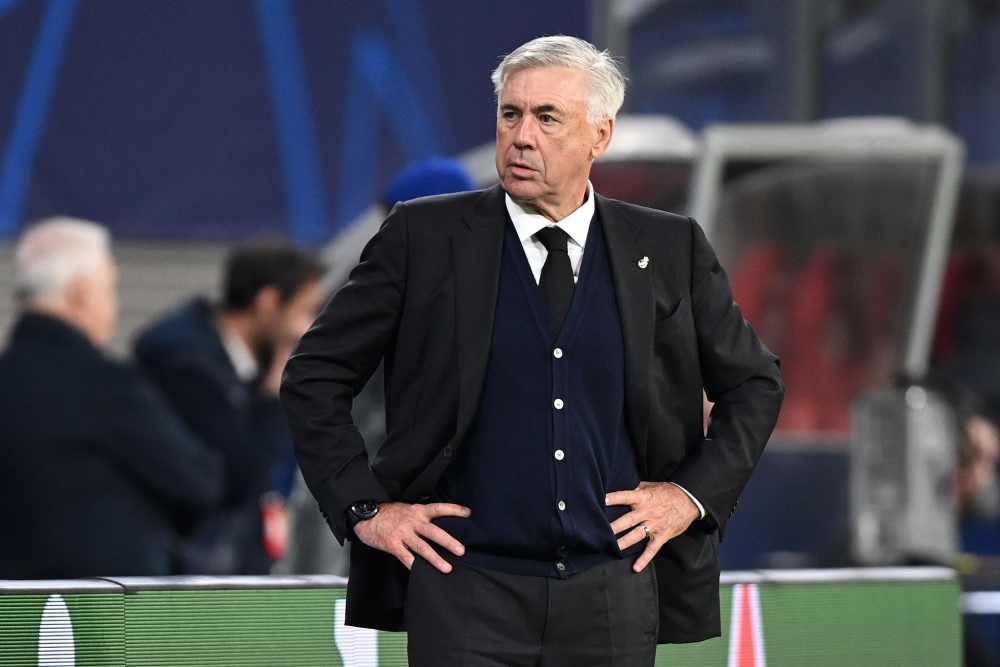
Who Is Carlo Ancelotti?
Carlo Ancelotti was born on June 10, 1959, in Reggiolo, Italy. Before becoming a famous coach, he was an intelligent midfielder with strong tactical awareness. During his playing career, he represented Parma, AS Roma, and AC Milan, winning many domestic and European titles.
His time playing under Arrigo Sacchi at AC Milan helped him approach modern football organization concepts. The knowledge accumulated on the pitch became an important foundation for his transition into coaching after retirement.
What makes Ancelotti special is that he did not build his reputation through strong statements or controversy. Instead, he established his position through calmness, adaptability, and consistent achievements in different environments.
The Journey to Becoming a Top Coach
The coaching career of Carlo Ancelotti began when he worked as an assistant to Arrigo Sacchi with the Italy national team. After that, he managed Reggiana, Parma, and Juventus before making his name at AC Milan.
During his time at San Siro, the Italian coach built a balanced team combining technique, experience, and tactical discipline. Players such as Paolo Maldini, Andrea Pirlo, Clarence Seedorf, Kaká, and Andriy Shevchenko all developed their abilities under his guidance.
Ancelotti’s AC Milan did not always dominate possession in every match. Instead, the team knew how to adjust the tempo, exploit spaces, and deliver decisive blows at the right moments. This style is also why his matches always attract viewers searching for the highlight bóng đá mới nhất on Ca Khia TV.
Success in Europe’s Top Leagues
One of the factors that created the special reputation of Carlo Ancelotti is his ability to succeed in multiple countries. He has won domestic league titles in Italy, England, France, Germany, and Spain, demonstrating rare adaptability.
At Chelsea, he helped the club win the Premier League and FA Cup double in the 2009/10 season. The team under Ancelotti played effective attacking football, scored many goals, while still maintaining the necessary defensive stability.
After that, he continued winning domestic titles with Paris Saint-Germain, Bayern Munich, and Real Madrid. Each league has its own characteristics, from the speed of English football, the tactical nature of Italy, to the technical style of La Liga. Wherever he worked, he knew how to adjust his methods to suit the players and environment.
Champions League Record
The Champions League is the competition that best demonstrates the talent of Carlo Ancelotti. He has won the tournament five times as a coach, including two titles with AC Milan and three with Real Madrid. This remains the competition record as of 2026.
That success did not come only from tactics. The Champions League requires coaches to manage pressure, understand player psychology, and make quick decisions during knockout rounds.
Ancelotti is particularly famous for helping teams remain calm when facing difficult situations. Real Madrid under his leadership produced many memorable comebacks, turning seemingly impossible situations into unbelievable victories.
Fans watching the highlight bóng đá mới nhất of matches on Cà Khịa Tivi can easily recognize that his teams rarely panic. Even without controlling the game, players maintain confidence and wait for opportunities to change the result.
Flexible Tactical Philosophy
Unlike many coaches whose names are closely linked to one specific system, Carlo Ancelotti is always willing to adjust his tactics. He has used 4-4-2, 4-3-2-1, 4-3-3, 4-2-3-1, and many other variations depending on squad characteristics.
At AC Milan, he moved Andrea Pirlo into a deeper playmaking role, maximizing the midfielder’s passing ability. At Real Madrid, he also flexibly changed the roles of stars to create balance between attack and defense.
Ancelotti’s philosophy does not place the system above the players. Instead of forcing players to completely adapt to a fixed idea, he builds strategies based on the qualities of the squad he has.
This practical approach helps teams maintain stability while reducing conflicts that often appear in dressing rooms full of stars.
The Art of Managing the Dressing Room
The ability to manage people is the most outstanding quality of Carlo Ancelotti. He has worked with many strong personalities such as Cristiano Ronaldo, Zlatan Ibrahimović, Sergio Ramos, Franck Ribéry, Vinícius Júnior, and Jude Bellingham.
Rather than trying to demonstrate authority through strict rules, he builds relationships based on respect. Ancelotti understands that every player requires a different communication approach. Young players need guidance and protection, while experienced stars need responsibility.
His calm personality creates a sense of security for players during stressful periods. This is especially important at major clubs, where a poor result can quickly lead to heavy criticism from the media.
Legacy at Real Madrid
Real Madrid is the club most closely associated with the most successful years of Carlo Ancelotti. Across two spells, he helped the club win a total of 15 trophies, including three Champions League titles, three FIFA Club World Cups, three UEFA Super Cups, two La Liga titles, two Copa del Rey trophies, and two Spanish Super Cups.
He not only brought trophies but also helped multiple generations of players develop. Experienced players were used effectively, while young talents such as Vinícius Júnior, Rodrygo, and Eduardo Camavinga gradually matured on the biggest stage.
On May 23, 2025, Real Madrid officially announced the end of his second tenure. Club history records Ancelotti as leading the team during two periods: 2013–2015 and 2021–2025.
Challenge with the Brazil National Team
After leaving Real Madrid, Carlo Ancelotti became head coach of the Brazil national team. The Brazilian Football Confederation announced his appointment in May 2025, marking the first time the Italian coach directly managed a national team.
The job in Brazil presents a completely different challenge compared to club football. Coaches have limited time with players, must select talent from different environments, and quickly build a suitable system.
After Brazil exited the 2026 World Cup, Ancelotti described the failure as the starting point of a new cycle. This shows his ambition to restructure and develop the national team in the next phase.
Why Is Ancelotti Always Respected by Players?
The special quality of Carlo Ancelotti lies in his balance between softness and decisiveness. He can be close to players while maintaining control. He listens to his staff’s opinions but does not avoid responsibility when making difficult choices.
Ancelotti also rarely publicly criticizes players in front of the media. When the team fails, he often accepts responsibility and solves internal issues. This approach protects the dressing room and creates loyalty from his players.
For audiences following football through Cakhia TV, his familiar raised-eyebrow expression and calm touchline presence have become an interesting symbol.
Conclusion
From an intelligent midfielder to one of football’s most successful coaches, Carlo Ancelotti has proven that success does not always require noise or controversy. His tactical adaptability, star management skills, and calm approach have helped him conquer the toughest competitions.
The Italian coach’s legacy is measured not only by the number of trophies but also by the respect he receives from players, colleagues, and fans. Through platforms such as Cakhia, viewers can continue following his journey, discovering fascinating tactical battles, and better appreciating the value of an outstanding football manager.