Football is not only fascinating because of fast-paced attacks, spectacular long-range goals, or the technical brilliance of world-class stars. Behind every match lies an intense tactical battle between managers, where a well-organized defensive system can often overcome a team with a more powerful attack. By understanding What Is Catenaccio, football fans can discover a tactical philosophy that once propelled Italian football to the pinnacle of world football and left a lasting influence on the evolution of the beautiful game.
Today, fans can watch top-level matches, analyze defensive structures, and study transition play through Vaoroi TV. Besides offering a convenient football viewing experience, the platform also provides tactical insights, match schedules, and key updates from the world’s leading competitions.
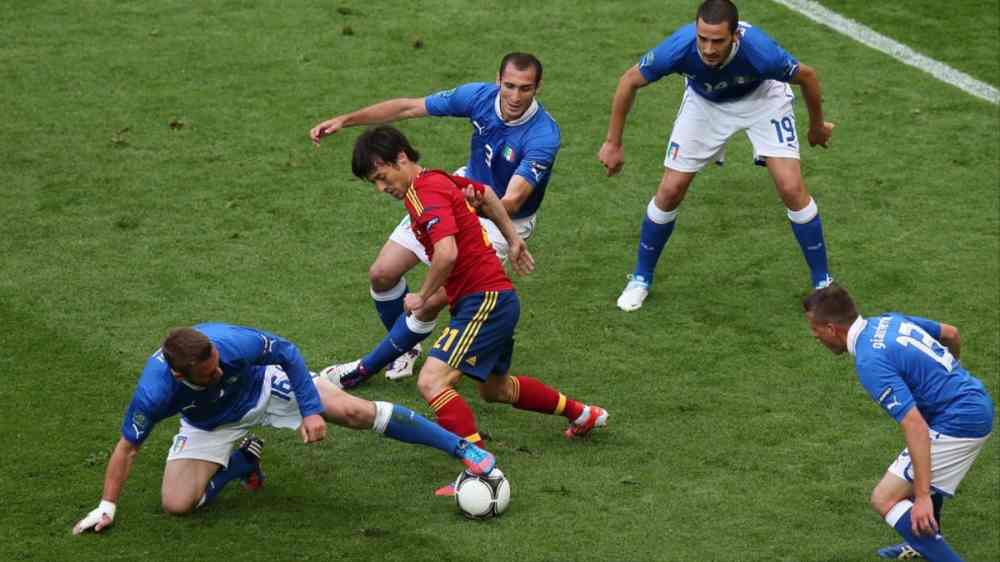
What Is Catenaccio and Where Did It Come From?
In Italian, “Catenaccio” literally means “door bolt” or “lock.” The term refers to a highly organized defensive system in which players create multiple protective layers in front of their goal. So, What Is Catenaccio from a tactical perspective? It is a strategy that prioritizes defensive security, disciplined team organization, and minimizing the spaces opponents can exploit.
The origins of Catenaccio are widely believed to have been influenced by the Verrou system, also known as the “Swiss Bolt,” developed by coach Karl Rappan. After being introduced to Italian football, several managers refined and transformed it into a unique tactical philosophy.
While exploring football content on Vaoroi, fans will frequently encounter the names Nereo Rocco and Helenio Herrera. These two legendary coaches played crucial roles in perfecting and popularizing Catenaccio. Herrera, in particular, guided Inter Milan to European dominance during the 1960s with an exceptionally disciplined defensive structure combined with devastating counterattacks.
The Key Characteristics of Catenaccio
To fully understand What Is Catenaccio, it is important to examine how the system operates. Its defining feature is the deployment of a free defender positioned behind the main defensive line. This player, commonly known as the libero or sweeper, covers teammates, corrects defensive mistakes, and intercepts opponents who break through the first line of defense.
In a classic Catenaccio setup, defenders closely mark opposing attackers. Behind them, the libero operates freely without marking a specific opponent, allowing the team to establish an almost impenetrable “lock” in front of goal.
Viewers watching through Vaoroi TV can easily recognize that Catenaccio does not simply involve parking the entire team inside the penalty area. Once possession is regained, players are expected to launch quick forward passes and fast transitions. This rapid switch from defense to attack is one of the most dangerous aspects of the system.
Fans following matches on kenh bong da truc tiep will also notice three defining characteristics of Catenaccio: compact defending, tight man-marking, and lightning-fast counterattacks. Teams using this approach do not necessarily dominate possession but instead maximize every scoring opportunity.
The Role of the Libero
Any explanation of What Is Catenaccio would be incomplete without discussing the libero. Positioned behind the central defenders, the libero is responsible for reading the game, anticipating attacking movements, and intervening at precisely the right moment.
Unlike traditional center-backs assigned to man-mark opponents, the libero enjoys much greater freedom. The player can move laterally, drop deeper, or step forward to initiate attacks. Therefore, a successful libero requires not only physical strength but also excellent tactical awareness and passing ability.
On Vaoroi Link, tactical analyses of Italian football frequently highlight legendary defenders such as Armando Picchi, Gaetano Scirea, and Franco Baresi. Each became famous for commanding the defensive line, anticipating danger, and launching attacks from deep positions.
The presence of a libero provides an additional layer of defensive security. Whenever a defender is beaten, the sweeper immediately covers the exposed space. This mechanism is one of the primary reasons why Catenaccio teams have historically been so difficult to break down.
Why Did Catenaccio Help Italy Dominate Football?
One reason many fans are interested in What Is Catenaccio is the tremendous success it once brought to Italian football. During an era when European football increasingly emphasized physicality and attacking play, Italian clubs adopted a more pragmatic philosophy. Instead of competing in high-scoring contests, they focused on controlling space and capitalizing on opponents’ mistakes.
Inter Milan under Helenio Herrera perfectly embodied this philosophy. The team combined disciplined defending, aggressive duels, and devastating counterattacking players. Inter won consecutive European Cups in 1964 and 1965, firmly establishing Catenaccio as a defining symbol of Italian football.
Through VaoroiTV, supporters can revisit many classic matches that demonstrate how a team does not need overwhelming possession to secure victory. Maintaining compact defensive spacing, limiting dangerous areas, and exploiting key moments are often enough to defeat technically superior opponents.
This tactical philosophy also influences the analysis of tỷ lệ kèo bóng đá. Teams with strong defensive records often produce low-scoring matches, requiring analysts to carefully evaluate defensive form, counterattacking quality, and tactical discipline.
Is Catenaccio a Negative Style of Football?
When discussing What Is Catenaccio, many people immediately associate it with ultra-defensive “parking the bus” tactics. However, this perception fails to capture the true nature of the system.
Traditional Catenaccio is far more than simply placing every player behind the ball. It demands exceptional marking, covering, positional discipline, and precise transitions. A team that only defends passively without a clear counterattacking strategy will eventually succumb to relentless pressure.
Fans watching matches on Vaoroi Live can appreciate how disciplined defensive teams create their own unique excitement. Much of the drama comes from one side attempting to dismantle an organized defensive block while the other patiently waits for the perfect counterattacking opportunity.
Catenaccio only becomes excessively negative when teams deliberately waste time, commit repeated tactical fouls, or completely abandon attacking intentions. When executed properly, however, it represents a sophisticated tactical art built upon discipline and collective organization.
The Difference Between Catenaccio and Modern Defensive Systems
To better understand What Is Catenaccio, it should be compared with modern defensive approaches. Traditional Catenaccio relies heavily on direct man-marking, with each defender closely tracking a designated attacker while the libero provides cover behind them.
Modern football, by contrast, primarily emphasizes zonal defending. Instead of following individual opponents throughout the match, players defend assigned spaces. Teams move collectively, compress distances between defensive lines, and coordinate pressing based on specific tactical triggers.
On Vaoroi Link, viewers can still observe many modern teams that preserve elements of Catenaccio. Atlético Madrid under Diego Simeone and several Italian national teams continue to prioritize defensive stability, intelligent covering, and rapid counterattacks. However, they combine these principles with coordinated pressing, spatial control, and structured build-up play.
Another major difference is that the traditional libero has almost disappeared. Modern center-backs are expected to contribute to ball circulation, while goalkeepers increasingly serve as the final covering defender behind the back line.
Advantages and Weaknesses of Catenaccio
One of the greatest strengths of What Is Catenaccio lies in its ability to protect the goal. The system is particularly suitable for teams lacking elite attacking stars but possessing disciplined, hardworking, and tactically intelligent players.
Catenaccio also allows teams to conserve energy during certain phases of the game. Rather than pressing aggressively across the entire pitch, players can retreat into a compact defensive block before launching dangerous counterattacks whenever opponents leave space behind.
Supporters following Vaoroi Tivi and kenh bong da truc tiep can observe that this tactical approach is especially effective in knockout competitions. Maintaining a clean sheet while converting a single opportunity is often enough to progress.
Nevertheless, Catenaccio also has several limitations. A deep defensive block may expose the team to prolonged pressure. Falling behind on the scoreboard can make tactical adjustments difficult. Furthermore, strict man-marking can be disrupted by opponents who constantly rotate positions and move intelligently.
The Lasting Legacy of Catenaccio
Today, very few teams still employ the original version of Catenaccio. Nevertheless, its core principles remain highly relevant in modern football. Concepts such as protecting central areas, maintaining compact defensive spacing, providing cover, and executing rapid counterattacks continue to influence elite coaches around the world.
When analyzing What Is Catenaccio, fans should not focus solely on the number of defenders or possession statistics. The true value of this philosophy lies in its tactical mindset: success is not necessarily determined by attacking more often but by controlling risk and exploiting opportunities with maximum efficiency.
Statistical analysis of tỷ lệ kèo bóng đá frequently reflects the impact of this defensive philosophy as well. Matches involving highly organized defensive teams are often expected to produce fewer goals, tighter contests, and a greater probability of a draw.
Conclusion
Based on the analysis above, What Is Catenaccio can be defined as a legendary Italian defensive system that emphasizes discipline, man-marking, covering, and swift counterattacks. Although the original version is rarely used today, its influence remains deeply embedded in the tactical history of world football.
As football continues to evolve, teams have become increasingly flexible. Nevertheless, the pragmatic mindset and exceptional spatial control that define Catenaccio remain timeless tactical principles. Through Vaoroi, football fans can enjoy exciting matches, study defensive organization, and gain a deeper appreciation for the strategic battles that unfold on the pitch.