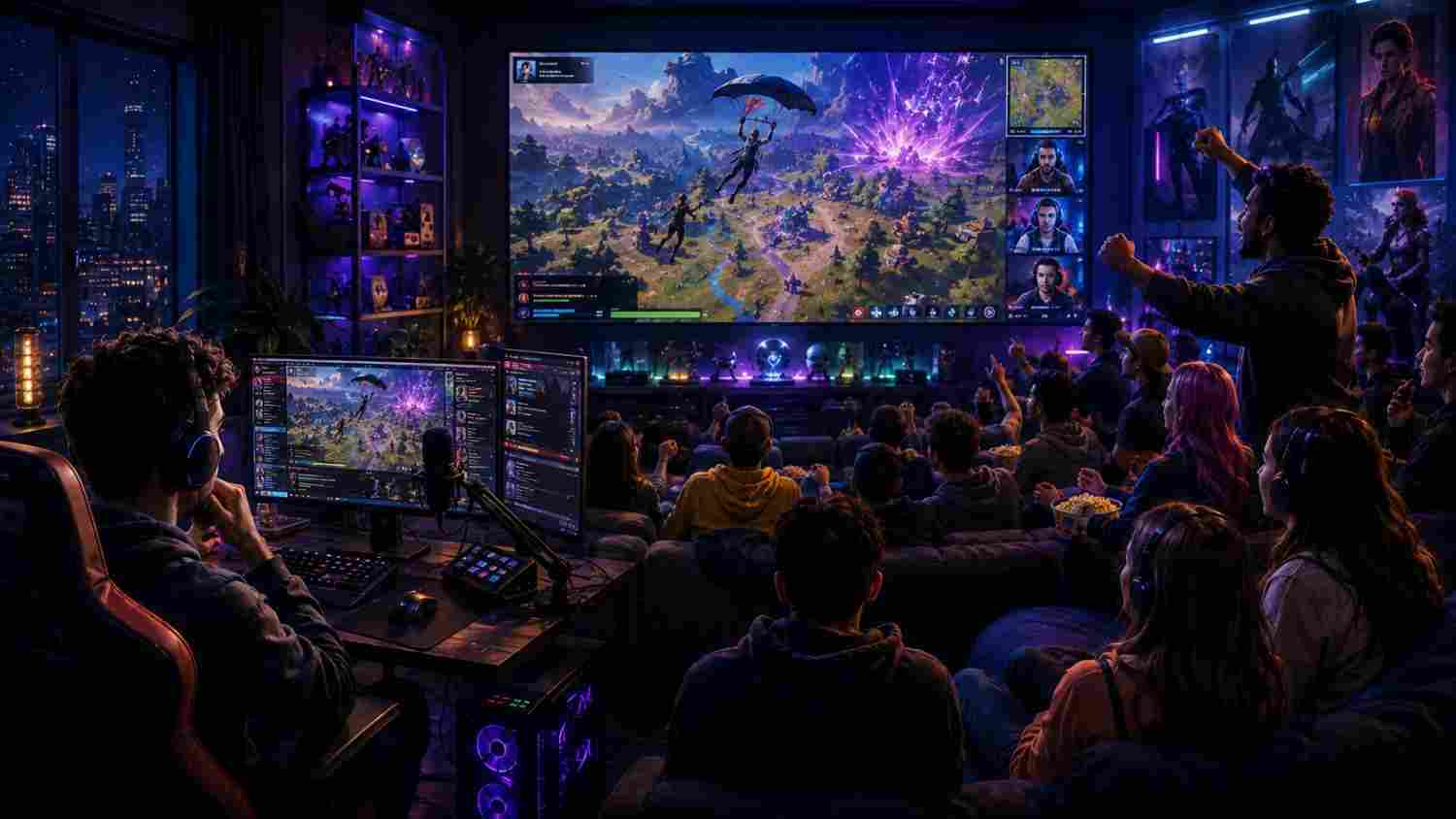
Every day, millions of people use Twitch and YouTube without gaming. Some watch for hours as others game, and for years, this baffled the non-gaming world; now, it’s clear that gaming is secondary to the less interactive act of watching.
The Rise of Game Spectating
Esports and competitive gaming have existed long before most people ever heard of Twitch or YouTube as platforms for casual spectators. Now, gaming is as easily accessible as scrolling through your phone with no other gaming equipment needed to watch.
There are three key reasons gaming has become such a massive and addictive habit:
– Convenience: Gaming requires expensive equipment to play, but watching requires a phone and a stable internet connection. Many games have high entry fees as the gaming world has moved to microtransactions and paywalls, furthering the inequity of who can even play.
– Skill Gap: There is a perceived barrier to casual enjoyment of games and a necessary skill to gain in order to enjoy high-level games; this does not exist when watching others game.
– Availability: Streaming and gaming videos are available on the internet 24/7, giving endless gaming content.
In economies where gaming equipment costs more than a salary, watching is a high-value alternative.
Why Viewers Keep Watching
Betting and casino platforms have noticed similar patterns, and the Pin Up-style live streams and tournaments with real-time leaderboard displays also exhibit the same behaviour. There are more complex reasons for the preference of viewing over participating, and we will outline those here.
First, there is the element of community. Viewers engage in a shared experience thanks to chat rooms and live comments. This is also similar to the experience of watching a sporting event with friends.
Second, there is also a preference for impulse-driven, personality-based content. Streamed content also attracts viewers for the streamer’s reactions and commentary rather than the content of the gameplay.
Third, there is also the element of constructive observation. New players are given the opportunity to watch and learn techniques from more skilled players.
The phenomena outlined above also explain why a single streamer can attract a larger viewer count than most television shows.
Streaming versus Playing
The table below shows how significant the difference has become. The most engaging activity in gaming culture has shifted from gaming to streaming, and that comparison is highlighted in the table below.
| Aspect | Playing a Game | Watching a Game |
| Time commitment | Requires active focus and skill development | Passive, can multitask while watching |
| Cost | Often requires purchasing the game and hardware | Free or low-cost through ad-supported platforms |
| Social element | Limited to in-game chat or voice | Live chat, community reactions, shared commentary |
| Entertainment source | Personal skill and progression | Streamer personality and gameplay quality |
PinUp-like live content has a similar structure where real-time streams or leaderboards serve as entertainment and engagement for users, who are betting in a separate instance, even if it’s at the same time.
Future Viewing Trends
Increased availability of online streaming and coverage of remote places in Africa will increase the popularity of spectating. Formats that offer short gaming video clips will make gaming content even more popular and convenient for viewers, especially younger generations.
Trends to monitor include:
- Highlight-driven discovery Short gaming clips will compel viewers to watch entire streams.
- Interactive viewing: Viewers, on a course of several platforms, are no longer passive commentators, they can influence the content of the stream.
- Pin-Up, like other platforms, will engage users in a manner that imitates gaming streams.
- Spectating will become more popular and will be a primary form of entertainment, rather than gaming.
Conclusion
The habit of watching games has become popular due to their entertainment value, accessibility, and ability to connect with friends. More than ever, people prefer watching games to playing them, thanks to streamers, communities that provide real-time feedback, and the 24/7 availability of entertaining content. Because of the continuous improvement of streaming technology and services in Africa, the tendency of people to prefer watching games is not likely to replace playing games, but rather, it will continue growing alongside it.